Close reading and analysis
Students start the year reading harder books and articles on their own. They learn to back up what they say about a text with specific lines and quotes, not just gut reactions.
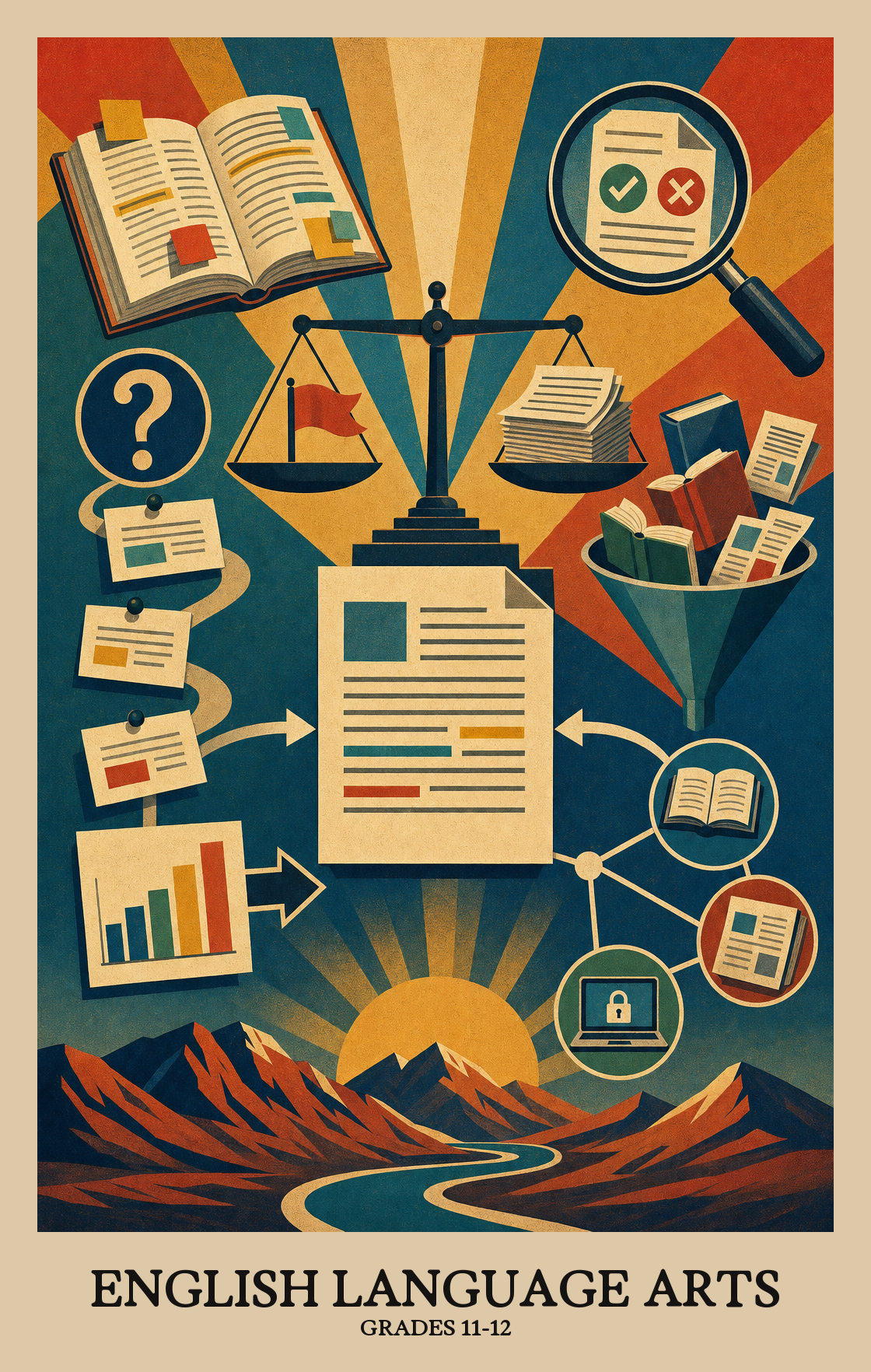
This is the year reading and writing start to look like college work. Students dig into dense books and articles, weigh how an author builds an argument, and judge whether the evidence actually holds up. Their own writing has to do the same, with a clear claim backed by sources they checked for credibility. By spring, students can research a real question and write a polished essay that defends a position with solid evidence.
Students start the year reading harder books and articles on their own. They learn to back up what they say about a text with specific lines and quotes, not just gut reactions.
Students write essays that take a position and defend it with reasons and evidence. They learn to anticipate the other side and answer it, the way a lawyer or a strong opinion writer would.
Students take on longer research projects driven by their own questions. They weigh which sources are trustworthy, pull information from several at once, and credit their sources instead of copying.
Students read pairs of works that tackle the same topic from different angles, including speeches, essays, and videos. They figure out how each author builds a case and which one holds up better.
Students present their thinking out loud, lead discussions, and adjust how they speak depending on the room. By year's end, their writing and speaking should sound ready for college or a first job.
Students read a passage carefully enough to spot what the author states outright and what the author only implies. When writing or speaking about the text, students back up every conclusion with a direct quote or specific detail from the page.
Students identify the main ideas a literary work is really about and trace how those ideas grow across the story. They also write a clear summary of the key details that support those ideas.
Students trace how characters, events, and ideas shift and connect across a full text, explaining why those changes happen and what drives them.
Students figure out what words really mean in context, including hidden feelings a word carries or comparisons the author is making. Then they look at why the author chose those exact words and what effect that choice has on the mood of the piece.
Students look at how a story or essay is built: how one paragraph sets up the next, how a single sentence can shift the whole piece, and how each part shapes what the writing means overall.
Students read a text and explain how the narrator's or author's perspective influences what gets included, what gets left out, and how the writing sounds.
Students compare how a story or idea comes across in different formats, like a film, a graph, and a written text, then judge which format makes the point most effectively.
Students read an argument and decide whether the reasoning actually holds up and whether the evidence is relevant to the claim being made. It's the skill of spotting a weak case, not just a confident one.
Students read two or more literary works on the same theme and compare how each author handles it. The focus is on what the authors chose differently and what those choices reveal.
Students read full-length novels, plays, poems, and essays on their own, without heavy support. The texts are challenging, and students are expected to work through them and understand what they read.
| Standard | Definition | Code |
|---|---|---|
| Cite Textual Evidence Grades 11-12 | Students read a passage carefully enough to spot what the author states outright and what the author only implies. When writing or speaking about the text, students back up every conclusion with a direct quote or specific detail from the page. | CT-ELA.RL.11-12.1 |
| Central Ideas Grades 11-12 | Students identify the main ideas a literary work is really about and trace how those ideas grow across the story. They also write a clear summary of the key details that support those ideas. | CT-ELA.RL.11-12.2 |
| Analyze Development Grades 11-12 | Students trace how characters, events, and ideas shift and connect across a full text, explaining why those changes happen and what drives them. | CT-ELA.RL.11-12.3 |
| Word Meanings Grades 11-12 | Students figure out what words really mean in context, including hidden feelings a word carries or comparisons the author is making. Then they look at why the author chose those exact words and what effect that choice has on the mood of the piece. | CT-ELA.RL.11-12.4 |
| Text Structure Grades 11-12 | Students look at how a story or essay is built: how one paragraph sets up the next, how a single sentence can shift the whole piece, and how each part shapes what the writing means overall. | CT-ELA.RL.11-12.5 |
| Point of View Grades 11-12 | Students read a text and explain how the narrator's or author's perspective influences what gets included, what gets left out, and how the writing sounds. | CT-ELA.RL.11-12.6 |
| Integrate Diverse Media Grades 11-12 | Students compare how a story or idea comes across in different formats, like a film, a graph, and a written text, then judge which format makes the point most effectively. | CT-ELA.RL.11-12.7 |
| Evaluate Arguments Grades 11-12 | Students read an argument and decide whether the reasoning actually holds up and whether the evidence is relevant to the claim being made. It's the skill of spotting a weak case, not just a confident one. | CT-ELA.RL.11-12.8 |
| Compare Texts Grades 11-12 | Students read two or more literary works on the same theme and compare how each author handles it. The focus is on what the authors chose differently and what those choices reveal. | CT-ELA.RL.11-12.9 |
| Range of Reading Grades 11-12 | Students read full-length novels, plays, poems, and essays on their own, without heavy support. The texts are challenging, and students are expected to work through them and understand what they read. | CT-ELA.RL.11-12.10 |
Students find the exact lines in a nonfiction piece that back up their thinking, then quote or reference those lines when they write or speak. The evidence has to come from the text itself, not just a gut feeling.
Students read a complex article or essay, identify its central argument or theme, and trace how the author builds on that idea across paragraphs. Then students summarize the key details that support it.
Students trace how a person, event, or idea changes as a text unfolds, and explain what drives those changes. The focus is on cause and connection, not just summary.
Students figure out what specific words mean in context, including slang, technical terms, and loaded language, then explain how the author's word choices shift the mood or message of the piece.
Students examine how a single sentence or paragraph connects to the rest of an article or essay, and what that placement does to the overall argument.
Students read a nonfiction passage and figure out who wrote it and why, then explain how that agenda shapes what the author included, left out, or chose to emphasize.
Students read a news article, then look at a chart or video covering the same topic and judge whether each source adds something useful or just repeats what the others already said.
Students read a nonfiction piece and decide whether the author's argument actually holds up. They check if the reasoning makes sense and if the evidence cited is relevant to the point being made.
Students read two or more nonfiction pieces on the same topic and explain how each author approaches it differently, what each one leaves out, and what both together reveal that neither one does alone.
Students read long, difficult nonfiction on their own, without help breaking it down. By the end of high school, they can work through dense articles, essays, and documents and understand what the writer is saying.
| Standard | Definition | Code |
|---|---|---|
| Cite Textual Evidence Grades 11-12 | Students find the exact lines in a nonfiction piece that back up their thinking, then quote or reference those lines when they write or speak. The evidence has to come from the text itself, not just a gut feeling. | CT-ELA.RI.11-12.1 |
| Central Ideas Grades 11-12 | Students read a complex article or essay, identify its central argument or theme, and trace how the author builds on that idea across paragraphs. Then students summarize the key details that support it. | CT-ELA.RI.11-12.2 |
| Analyze Development Grades 11-12 | Students trace how a person, event, or idea changes as a text unfolds, and explain what drives those changes. The focus is on cause and connection, not just summary. | CT-ELA.RI.11-12.3 |
| Word Meanings Grades 11-12 | Students figure out what specific words mean in context, including slang, technical terms, and loaded language, then explain how the author's word choices shift the mood or message of the piece. | CT-ELA.RI.11-12.4 |
| Text Structure Grades 11-12 | Students examine how a single sentence or paragraph connects to the rest of an article or essay, and what that placement does to the overall argument. | CT-ELA.RI.11-12.5 |
| Point of View Grades 11-12 | Students read a nonfiction passage and figure out who wrote it and why, then explain how that agenda shapes what the author included, left out, or chose to emphasize. | CT-ELA.RI.11-12.6 |
| Integrate Diverse Media Grades 11-12 | Students read a news article, then look at a chart or video covering the same topic and judge whether each source adds something useful or just repeats what the others already said. | CT-ELA.RI.11-12.7 |
| Evaluate Arguments Grades 11-12 | Students read a nonfiction piece and decide whether the author's argument actually holds up. They check if the reasoning makes sense and if the evidence cited is relevant to the point being made. | CT-ELA.RI.11-12.8 |
| Compare Texts Grades 11-12 | Students read two or more nonfiction pieces on the same topic and explain how each author approaches it differently, what each one leaves out, and what both together reveal that neither one does alone. | CT-ELA.RI.11-12.9 |
| Range of Reading Grades 11-12 | Students read long, difficult nonfiction on their own, without help breaking it down. By the end of high school, they can work through dense articles, essays, and documents and understand what the writer is saying. | CT-ELA.RI.11-12.10 |
Students write a clear argument about a serious topic or text, then back it up with solid reasoning and specific evidence from sources. The goal is a case that holds up, not just an opinion.
Students write essays or reports that explain a complex topic clearly, using well-chosen details and logical organization. The goal is accuracy and clarity, not persuasion.
Students write a true or fictional story with a clear sequence of events, specific details that bring scenes to life, and techniques like dialogue or pacing that keep a reader engaged.
Writing fits the assignment. Students match how they organize and phrase their work to what the task asks for, who will read it, and why it was assigned.
Students plan, draft, and revise their writing until it says what they mean. That might mean editing a sentence, reworking a whole paragraph, or starting fresh with a different approach.
Students use word processors, websites, and online tools to write, publish, and share their work with real readers. That includes giving and receiving feedback from classmates or collaborators online.
Students pick a focused question and research it, either quickly or over several weeks. They show what they learned by connecting sources and explaining the subject clearly.
Students pull information from several sources, print and online, then check whether each source is trustworthy and accurate. They weave the information into their writing in their own words, giving credit where it's due.
Students pull direct quotes and details from books, articles, or other sources to back up their analysis or research. The evidence has to connect clearly to the point they're making.
Students write often, for many different reasons, using both quick assignments and longer projects. Practice across short and extended writing builds the habits that make writing feel less difficult over time.
| Standard | Definition | Code |
|---|---|---|
| Arguments Grades 11-12 | Students write a clear argument about a serious topic or text, then back it up with solid reasoning and specific evidence from sources. The goal is a case that holds up, not just an opinion. | CT-ELA.W.11-12.1 |
| Informative Texts Grades 11-12 | Students write essays or reports that explain a complex topic clearly, using well-chosen details and logical organization. The goal is accuracy and clarity, not persuasion. | CT-ELA.W.11-12.2 |
| Narratives Grades 11-12 | Students write a true or fictional story with a clear sequence of events, specific details that bring scenes to life, and techniques like dialogue or pacing that keep a reader engaged. | CT-ELA.W.11-12.3 |
| Coherent Writing Grades 11-12 | Writing fits the assignment. Students match how they organize and phrase their work to what the task asks for, who will read it, and why it was assigned. | CT-ELA.W.11-12.4 |
| Revision Process Grades 11-12 | Students plan, draft, and revise their writing until it says what they mean. That might mean editing a sentence, reworking a whole paragraph, or starting fresh with a different approach. | CT-ELA.W.11-12.5 |
| Use Technology Grades 11-12 | Students use word processors, websites, and online tools to write, publish, and share their work with real readers. That includes giving and receiving feedback from classmates or collaborators online. | CT-ELA.W.11-12.6 |
| Research Projects Grades 11-12 | Students pick a focused question and research it, either quickly or over several weeks. They show what they learned by connecting sources and explaining the subject clearly. | CT-ELA.W.11-12.7 |
| Gather Information Grades 11-12 | Students pull information from several sources, print and online, then check whether each source is trustworthy and accurate. They weave the information into their writing in their own words, giving credit where it's due. | CT-ELA.W.11-12.8 |
| Cite Evidence Grades 11-12 | Students pull direct quotes and details from books, articles, or other sources to back up their analysis or research. The evidence has to connect clearly to the point they're making. | CT-ELA.W.11-12.9 |
| Range of Writing Grades 11-12 | Students write often, for many different reasons, using both quick assignments and longer projects. Practice across short and extended writing builds the habits that make writing feel less difficult over time. | CT-ELA.W.11-12.10 |
Students come to discussions ready to engage, not just to wait for their turn to speak. They build on what others say and push their own ideas forward clearly.
Students pull together information from sources like charts, videos, and speeches, then judge whether each source makes the overall argument stronger or weaker.
Students listen to a speech or argument and decide whether the speaker's reasoning holds up, whether the evidence is real and relevant, and whether the speaker is using language to persuade rather than inform.
Students organize a speech or presentation so the main point is clear and each piece of evidence leads the audience logically to the next. The structure, tone, and detail level fit the specific topic and the people listening.
Students choose charts, images, or video clips to support a presentation, making sure each visual adds something the spoken words alone can't.
Students shift how they speak depending on the situation, using formal English for a presentation or class discussion and a more casual tone when the setting calls for it.
| Standard | Definition | Code |
|---|---|---|
| Collaborative Discussions Grades 11-12 | Students come to discussions ready to engage, not just to wait for their turn to speak. They build on what others say and push their own ideas forward clearly. | CT-ELA.SL.11-12.1 |
| Integrate Information Grades 11-12 | Students pull together information from sources like charts, videos, and speeches, then judge whether each source makes the overall argument stronger or weaker. | CT-ELA.SL.11-12.2 |
| Evaluate Speaker Grades 11-12 | Students listen to a speech or argument and decide whether the speaker's reasoning holds up, whether the evidence is real and relevant, and whether the speaker is using language to persuade rather than inform. | CT-ELA.SL.11-12.3 |
| Present Ideas Grades 11-12 | Students organize a speech or presentation so the main point is clear and each piece of evidence leads the audience logically to the next. The structure, tone, and detail level fit the specific topic and the people listening. | CT-ELA.SL.11-12.4 |
| Use Visual Displays Grades 11-12 | Students choose charts, images, or video clips to support a presentation, making sure each visual adds something the spoken words alone can't. | CT-ELA.SL.11-12.5 |
| Adapt Speech Grades 11-12 | Students shift how they speak depending on the situation, using formal English for a presentation or class discussion and a more casual tone when the setting calls for it. | CT-ELA.SL.11-12.6 |
Students apply standard grammar rules in their writing and speech. This includes choosing the right verb forms, pronoun cases, and sentence structures to make meaning clear.
Students apply correct capitalization, punctuation, and spelling in their writing without being reminded. By 11th and 12th grade, these conventions should be habit, not a checklist.
Students choose words and sentence structures that fit the situation, whether writing a formal essay or a casual email. Reading closely, they notice how other writers make the same choices.
When students hit an unfamiliar word, they figure out what it means by reading the surrounding sentences, breaking the word into roots or prefixes, or looking it up in a dictionary or subject-specific reference.
Students read and explain figures of speech, word connections, and shades of meaning. They notice how a word's connotation can shift a sentence, and why the writer chose that word over a similar one.
Students learn and correctly use the kind of precise, subject-specific vocabulary that shows up in college courses, job training, and serious nonfiction. The goal is a working vocabulary broad enough to read, write, and speak with confidence in adult settings.
| Standard | Definition | Code |
|---|---|---|
| Standard Grammar Grades 11-12 | Students apply standard grammar rules in their writing and speech. This includes choosing the right verb forms, pronoun cases, and sentence structures to make meaning clear. | CT-ELA.L.11-12.1 |
| Spelling and Punctuation Grades 11-12 | Students apply correct capitalization, punctuation, and spelling in their writing without being reminded. By 11th and 12th grade, these conventions should be habit, not a checklist. | CT-ELA.L.11-12.2 |
| Style Grades 11-12 | Students choose words and sentence structures that fit the situation, whether writing a formal essay or a casual email. Reading closely, they notice how other writers make the same choices. | CT-ELA.L.11-12.3 |
| Word Strategies Grades 11-12 | When students hit an unfamiliar word, they figure out what it means by reading the surrounding sentences, breaking the word into roots or prefixes, or looking it up in a dictionary or subject-specific reference. | CT-ELA.L.11-12.4 |
| Figurative Language Grades 11-12 | Students read and explain figures of speech, word connections, and shades of meaning. They notice how a word's connotation can shift a sentence, and why the writer chose that word over a similar one. | CT-ELA.L.11-12.5 |
| Academic Vocabulary Grades 11-12 | Students learn and correctly use the kind of precise, subject-specific vocabulary that shows up in college courses, job training, and serious nonfiction. The goal is a working vocabulary broad enough to read, write, and speak with confidence in adult settings. | CT-ELA.L.11-12.6 |
Connecticut administers the SAT School Day to all 11th-grade students free of charge as part of the state's accountability system.
Students read challenging books, articles, and speeches and write about them in depth. Most assignments ask for a clear claim backed by evidence from the text. Expect longer essays, research projects, and class discussions where students defend their thinking out loud.
Ask students to explain what a passage is really arguing and what makes them think so. A quick conversation at dinner about a news article or a chapter from a novel goes a long way. The goal is not to quiz them but to push for evidence behind their opinions.
Start with close reading and evidence-based paragraphs, then move into longer argument essays in the fall. Use the winter for research and synthesis across multiple sources. Save narrative and reflective writing, plus a capstone argument or research project, for spring.
Two stand out: integrating evidence smoothly into a sentence, and analyzing that evidence rather than just dropping it in. Many students also need repeated practice judging whether a source is credible. Short, frequent writing tasks help more than a few long essays.
Expect a mix of short responses most weeks and a longer essay or research piece every few weeks. Revision matters as much as the first draft. Students should be planning, drafting, getting feedback, and rewriting, not turning in one-and-done work.
Grammar work focuses on sentence variety, punctuation in complex sentences, and matching style to audience. Vocabulary grows mostly through reading hard texts and using new words in writing. Memorized word lists are less useful than noticing how skilled writers choose words.
By the end of the year, students should be able to read a complex text on their own, build an argument with cited evidence, and revise based on feedback. They should also be able to speak clearly in a discussion or presentation and adjust their tone for the situation.